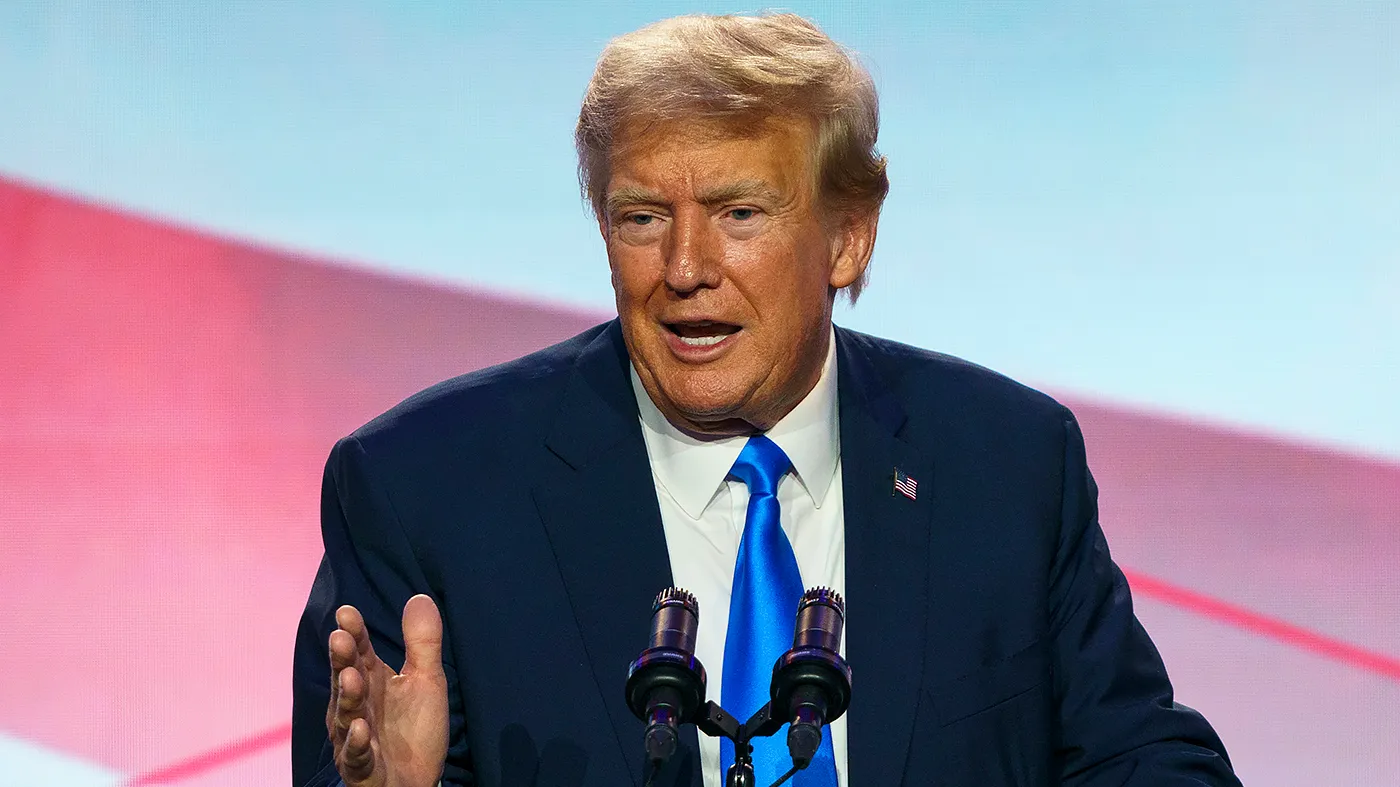
President Donald Trump signed a government funding bill Wednesday night, ending a record 43-day shutdown that caused financial stress for federal workers who went without paychecks, stranded scores of travelers at airports and generated long lines at some food banks.
The signing ceremony came just hours after the House passed the measure on a mostly party-line vote of 222-209. The Senate had already passed the measure Monday.
The shutdown magnified partisan divisions in Washington as Trump took unprecedented unilateral actions — including canceling projects and trying to fire federal workers — to pressure Democrats into relenting on their demands.
Democrats wanted to extend an enhanced tax credit expiring at the end of the year that lowers the cost of health coverage obtained through Affordable Care Act marketplaces. They refused to go along with a short-term spending bill that did not include that priority. But Republicans said that was a separate policy fight to be held at another time.
Here’s the latest:
Wait and see on poverty program reimbursements
The federal government is back but it is unclear when and if Washington, D.C., will be reimbursed for the payments it made to programs for its impoverished residents while the government was shut down.
Mayor Muriel Bowser ordered that the thousands of recipients of SNAP (Supplemental Nutrition Assistance Program) and the WIC program receive their benefits during the shutdown. The city ultimately covered $18.5 million of the SNAP expense after the federal government made a partial payment of $8 million at the direction of a federal district judge.
Overall, it will be months before city officials know the full impact of the shutdown in terms of economics although at least budgetarily it will be a better outcome than 2024 when the city was unable to spend more than $1 billion of its own tax revenue on its budget because of action by the House.
This year the city retained its spending authority on the budget the council passed.