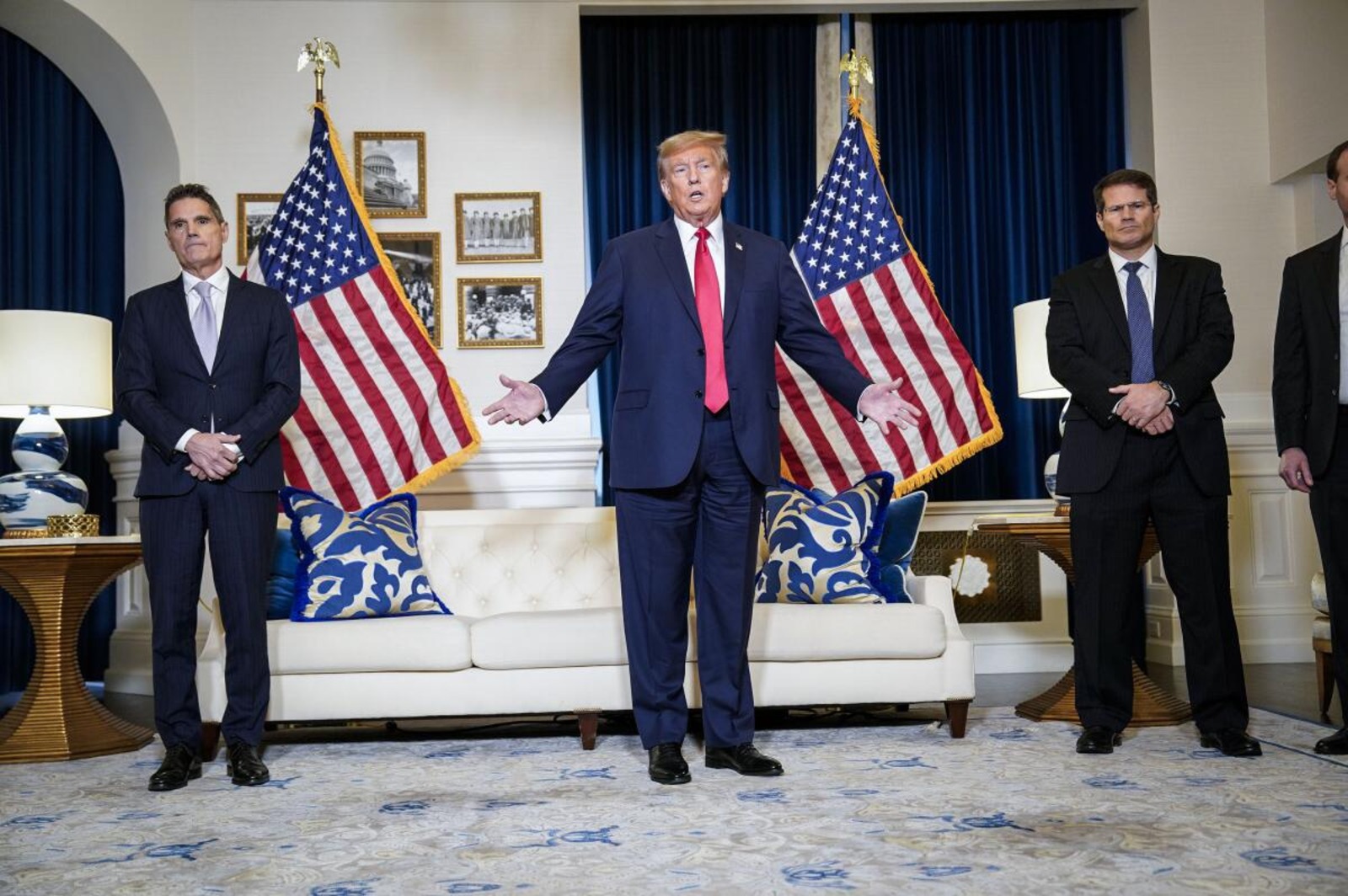
On Monday, the Supreme Court made a landmark decision, affirming that former presidents enjoy significant immunity from prosecution.
This ruling effectively prolongs the Washington criminal case against Donald Trump, who faces allegations of attempting to overturn the results of the 2020 presidential election, and significantly diminishes the likelihood of him facing trial before the upcoming November election.
In a decisive 6-3 verdict, the court’s conservative majority, which includes three justices appointed by Trump himself, has limited the scope of the case against him and sent it back to the trial court to assess the remaining elements of special counsel Jack Smith’s indictment. Trump took to X to proclaim a “BIG WIN,” while President Joe Biden expressed concern, stating that the justices have established “a dangerous precedent (that) undermines the rule of this nation.”
The ruling reflected a muscular view of presidential power, and left dissenting judges to criticize it as undermining a core democratic principle that no person is above the law.
The court’s ruling underscored the significant role the justices will play in the upcoming presidential election this November. Previously, they dismissed attempts to exclude him from the ballot due to his conduct after the 2020 election. Additionally, just last week, the court narrowed the scope of an obstruction charge against Trump, which has been applied to many of his supporters who invaded the Capitol on January 6, 2021.
The divisions among the justices reflect the broader political rifts within the nation. “In our constitutional framework of separated powers, the nature of presidential authority grants a former president complete immunity from criminal charges for actions taken within his definitive constitutional powers,” Chief Justice John Roberts articulated on behalf of the court. “Moreover, he is entitled to at least a presumption of immunity for all official actions. However, there is no immunity for actions deemed unofficial.”
The chief justice firmly stated that the president “is not above the law.” However, in a passionate dissent representing the court’s three liberal justices, Justice Sonia Sotomayor declared, “With every exercise of official authority, the President now resembles a king who stands above the law.”
While delivering her opinion in the courtroom, Sotomayor emphasized, “Our Constitution does not provide immunity for a former president when it comes to answering for criminal and treasonous actions, and therefore, I dissent.” She argued that the ruling “ridicules the fundamental principle that is central to our Constitution and governmental framework: that no individual is above the law.” Sotomayor criticized the court’s protection of presidents, asserting that “it is as troubling as it appears, and it lacks any solid foundation.”
Trump took to his social media platform in bold capital letters right after the ruling was announced, declaring: “A MAJOR VICTORY FOR OUR CONSTITUTION AND DEMOCRACY. I AM PROUD TO BE AN AMERICAN!”
In his evening address from the White House, Biden referenced historical limitations on presidential authority dating back to George Washington, lamenting that “effectively, today’s ruling likely indicates that there are nearly no boundaries on presidential actions.”
Senate Majority Leader Chuck Schumer has condemned the ruling as “a disgraceful decision,” attributing its creation to the three justices appointed by Trump. “This decision undermines the credibility of the Supreme Court and implies that political influence overshadows justice in our courts today,” the New York Democrat expressed on X.
The justices dismissed one part of the indictment, asserting that Trump is “absolutely immune” from prosecution regarding his discussions with the Justice Department. Additionally, Trump is deemed “at least presumptively immune” from claims that he attempted to coerce Vice President Mike Pence into rejecting the certification of Joe Biden’s electoral victory on January 6, 2021.
However, Chief Justice Roberts noted that prosecutors may still argue that Trump’s actions toward Pence could be relevant to the case against him.
The court has called for a fact-finding review concerning one of the more notable allegations in the indictment—that Trump was involved in a scheme to recruit fake electors in key states won by Biden, who would falsely claim that Trump had emerged victorious.
The two sides presented starkly different views on whether this effort could be seen as official, and the conservative justices indicated that resolving this issue would necessitate further examination at the trial court level.