Elected officials and union representatives in Baltimore are advocating for improved and more humane working conditions for the city’s public works employees following the tragic collapse and subsequent death of a man from heatstroke last week while performing trash collection duties in extreme summer temperatures. Critics argue that the recent passing of Ronald Silver II, aged 36, highlights the persistent issues within the agency, including a toxic culture fostered by supervisors and a disregard for fundamental health and safety protocols.
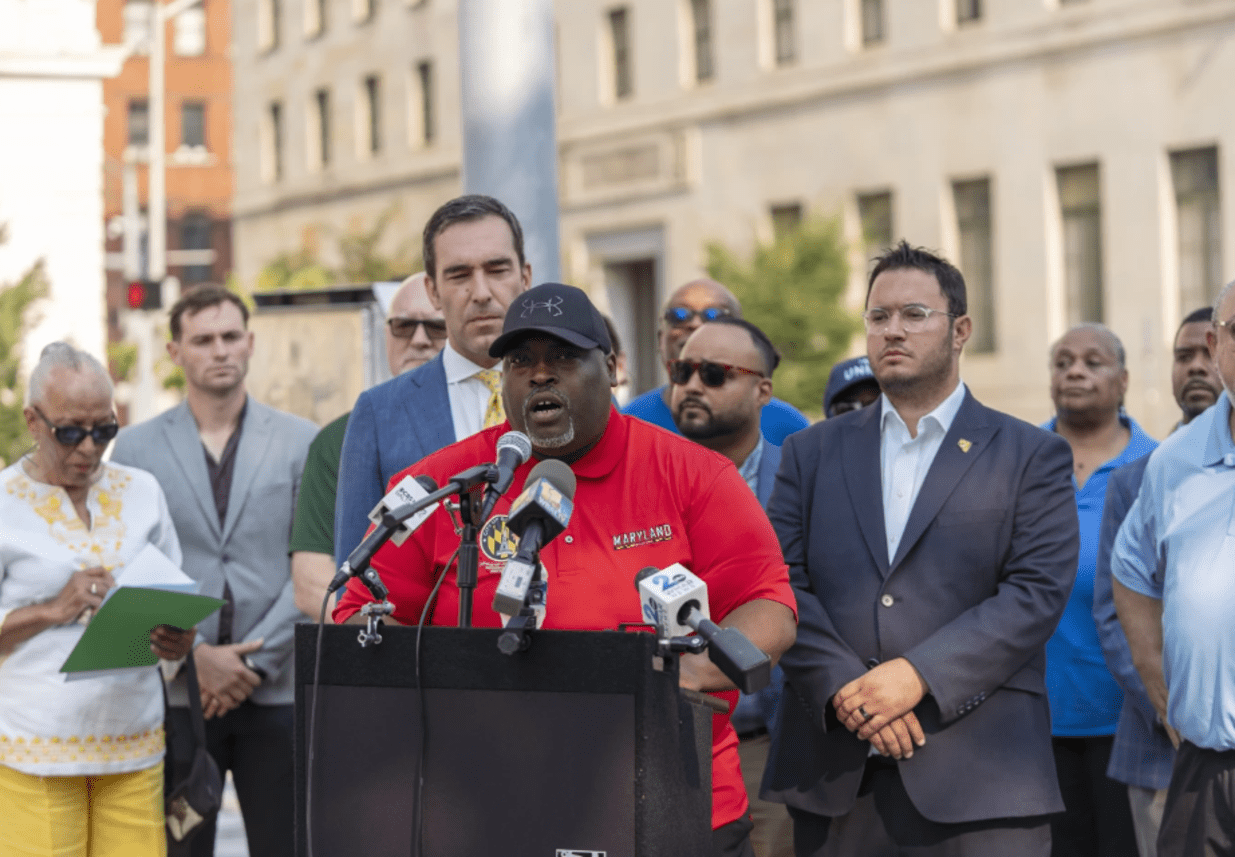
“These individuals are undertaking tasks that most of us would prefer to avoid. They are responsible for collecting waste,” stated Baltimore City Councilmember and former public works employee Antonio Glover during a press conference held outside City Hall on Tuesday morning. “I am here today to assert that we can no longer treat our workers as if they are the very refuse they collect.”
City officials had previously said that Silver died late Friday afternoon after experiencing “a medical situation that required immediate assistance while he and his fellow crew members were riding in their truck.” Temperatures in the Baltimore area climbed to about 100 degrees (38 C) on Friday, according to the National Weather Service.
On Monday, the Maryland Office of the Chief Medical Examiner determined that hyperthermia, a condition caused by excessive body heat, was the cause of death. The incident has been classified as accidental. Baltimore Mayor Brandon Scott, along with Acting Department of Public Works Director Khalil Zaied, issued a statement indicating that their departments are collaborating with the medical team and crew who assisted Mr. Silver to gather further information regarding the events that transpired. According to local news reports, Silver approached the door of a resident in northeast Baltimore late Friday afternoon seeking assistance.
The individual who responded to his call promptly contacted emergency services on his behalf. “He ceased to breathe on my doorstep,” Gabby Avendano recounted to The Baltimore Sun. She described Silver as appearing disoriented and struggling for survival when he arrived at her home, requesting that she pour water on him.
“The fact that none of his colleagues called 911 while he was exhibiting such alarming behavior is truly perplexing,” she expressed to the newspaper. Mary Stewart, a spokesperson for the Department of Public Works, refrained from addressing inquiries regarding the circumstances surrounding Silver’s death, including whether supervisors had been informed of his condition earlier in the shift. “Ronald Silver died while serving the citizens of Baltimore,” stated Councilmember Zeke Cohen during the press conference. “He deserves to be honored with dignity.
However, as we pay tribute to him, we must also acknowledge the truth. He should still be alive today.” The circumstances of Silver’s death have raised pressing concerns regarding the health and safety of sanitation workers during extreme summer temperatures, particularly as unprecedented heat waves are becoming more frequent worldwide. Baltimore’s public works agency has faced increased scrutiny for this very issue. Last month, the city’s inspector general published a report indicating that some employees of the Department of Public Works lacked sufficient access to water, ice, air conditioning, and fans to effectively carry out their trash collection duties during severe summer heat. Site inspections revealed malfunctioning HVAC systems at several solid waste facilities, according to the inspector general’s office.
In light of the recent findings, agency officials have committed to resolving the issue by ensuring the proper maintenance of ice machines, repairing malfunctioning air-conditioning units in their waste collection vehicles, distributing Gatorade, and offering employees an alternative to their standard uniforms during periods of high temperatures, among other initiatives. Additionally, the agency announced on Monday evening that it would be halting trash and recycling collections on Tuesday to conduct mandatory heat safety training for its employees, which will cover the identification of signs and symptoms associated with heat stroke and other related health concerns. Leaders of the labor unions representing the city’s public works workforce expressed their gratitude for the agency’s initiatives; however, they emphasized the necessity for comprehensive changes. They submitted a list of demands aimed at improving working conditions, which includes the revision of policies, enhancements to facilities, and improved training programs.