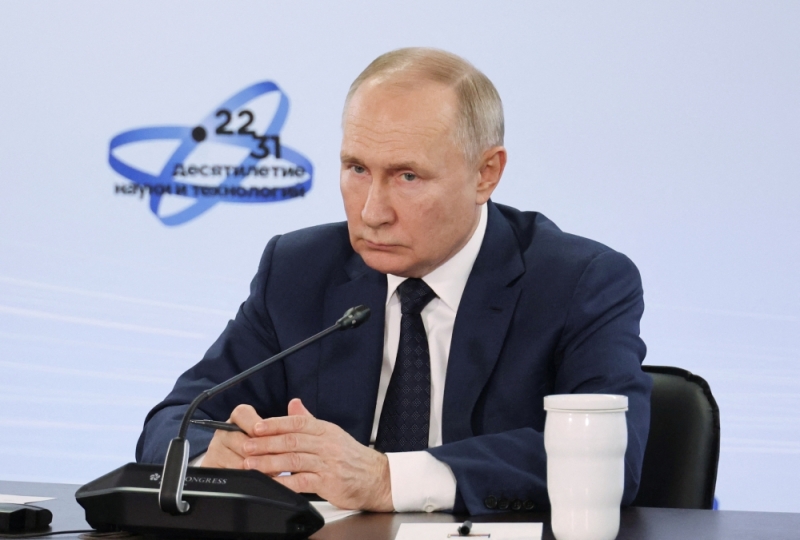
The Russian president, Vladimir Putin, will address the nation on December 14, according to the Kremlin. The speech comes as the country prepares for the presidential election in March 2024, in which Putin is widely expected to seek a fifth term in office.
The Kremlin did not reveal the details of the speech, but said it would cover “the main directions of the country’s development, as well as the current domestic and international situation”. The speech will be broadcast live on state television and radio channels.
Putin’s last speech to the nation was in April 2021, when he warned of the “red line” that Russia would not allow anyone to cross, amid rising tensions with the West over Ukraine, Belarus and other issues. He also announced new social benefits and economic measures to support the population during the coronavirus pandemic.
The upcoming speech is seen as an opportunity for Putin to outline his vision and priorities for the next six years, as well as to boost his popularity ahead of the election. According to a recent poll by the independent Levada Center, Putin’s approval rating stood at 64% in November 2023, down from 69% in January.
Some analysts expect Putin to announce new initiatives to improve living standards, fight corruption, modernize infrastructure and strengthen national security. Others speculate that he may address some of the challenges facing Russia, such as demographic decline, environmental degradation, social inequality and human rights violations.
The speech will also be closely watched by the opposition and civil society groups, who have faced increasing repression and harassment from the authorities in recent years. Many prominent critics of Putin, such as Alexei Navalny, Mikhail Khodorkovsky and Lyubov Sobol, have been jailed, exiled or barred from running for office. The Kremlin has also cracked down on independent media outlets, NGOs and online platforms that challenge its narrative or expose its wrongdoing.
The presidential election is scheduled for March 17, 2024. Under the current constitution, which was amended in 2020, Putin is allowed to run for two more six-year terms, potentially extending his rule until 2036. He has not officially confirmed his candidacy yet, but few doubt that he will seek to remain in power. His main rivals are likely to be from the Communist Party and other pro-Kremlin parties, as well as some marginal candidates from the liberal opposition. However, none of them are expected to pose a serious threat to Putin’s dominance, given his control over the media, the electoral system and the security apparatus.