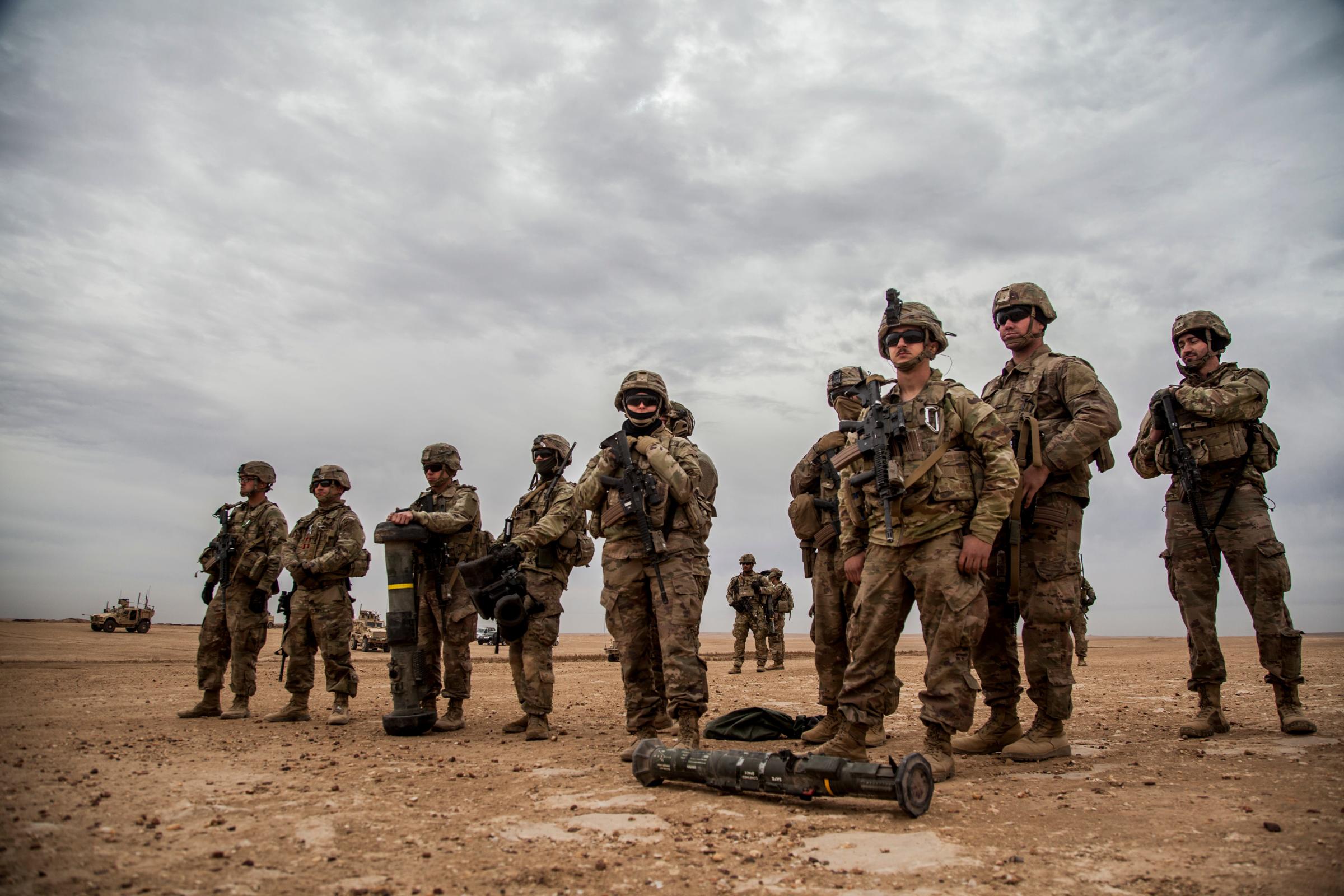
The US has been involved in several military conflicts in the Middle East for decades, but its presence there is increasingly challenged by hostile actors. From Iran-backed militias in Iraq to the Taliban in Afghanistan, American forces face constant threats and attacks that sometimes result in casualties. However, the US does not always respond with force, even when it has the capability and the legal justification to do so. Why is that?
There are several reasons why the US holds its fire in the Middle East, and they have to do with both strategic and political considerations. Here are some of them:
- The US wants to avoid escalation and further violence. The Middle East is a complex and volatile region, where any military action can have unintended and unpredictable consequences. The US does not want to trigger a wider war or a regional crisis that could endanger its allies, interests, and reputation. For example, after Iran launched missiles at US bases in Iraq in 2020, the US refrained from retaliating because it did not want to escalate the situation and risk a full-scale war.
- The US wants to preserve its diplomatic leverage and influence. The US has been trying to negotiate with some of its adversaries in the Middle East, such as Iran and the Taliban, to achieve its goals of limiting Iran’s nuclear program and ending the war in Afghanistan. The US does not want to jeopardize these talks by launching military strikes that could undermine trust and goodwill. For example, after a drone attack on a US base in Iraq in 2021, the US did not retaliate because it wanted to keep the door open for dialogue with Iran.
- The US wants to respect its partners and allies. The US does not operate in the Middle East alone, but in coordination and cooperation with other countries that host its troops or support its missions. The US does not want to act unilaterally or without consultation with its partners, who may have different views and interests on how to deal with the security challenges in the region. For example, after a rocket attack on a US base in Syria in 2021, the US did not retaliate because it wanted to respect the sovereignty and wishes of its host country.
- The US wants to uphold its values and principles. The US claims to be a champion of democracy, human rights, and international law in the world, and it tries to act accordingly in its foreign policy. The US does not want to use excessive or indiscriminate force that could harm civilians, violate human rights, or breach international norms. For example, after a car bomb attack on a US convoy in Kabul in 2021, the US did not retaliate because it wanted to avoid civilian casualties and collateral damage.
These are some of the reasons why the US holds its fire in the Middle East, even when it faces attacks and provocations from its enemies. However, this does not mean that the US is weak or passive. The US still retains the right and the ability to defend itself and its allies when necessary, and it does not rule out the use of force as an option when warranted. The US also uses other means of pressure and deterrence, such as sanctions, cyber operations, intelligence sharing, and diplomatic isolation, to counter its adversaries and protect its interests. The US hopes that by showing restraint and responsibility, it can reduce tensions and violence in the region, and pave the way for a more peaceful and stable future.