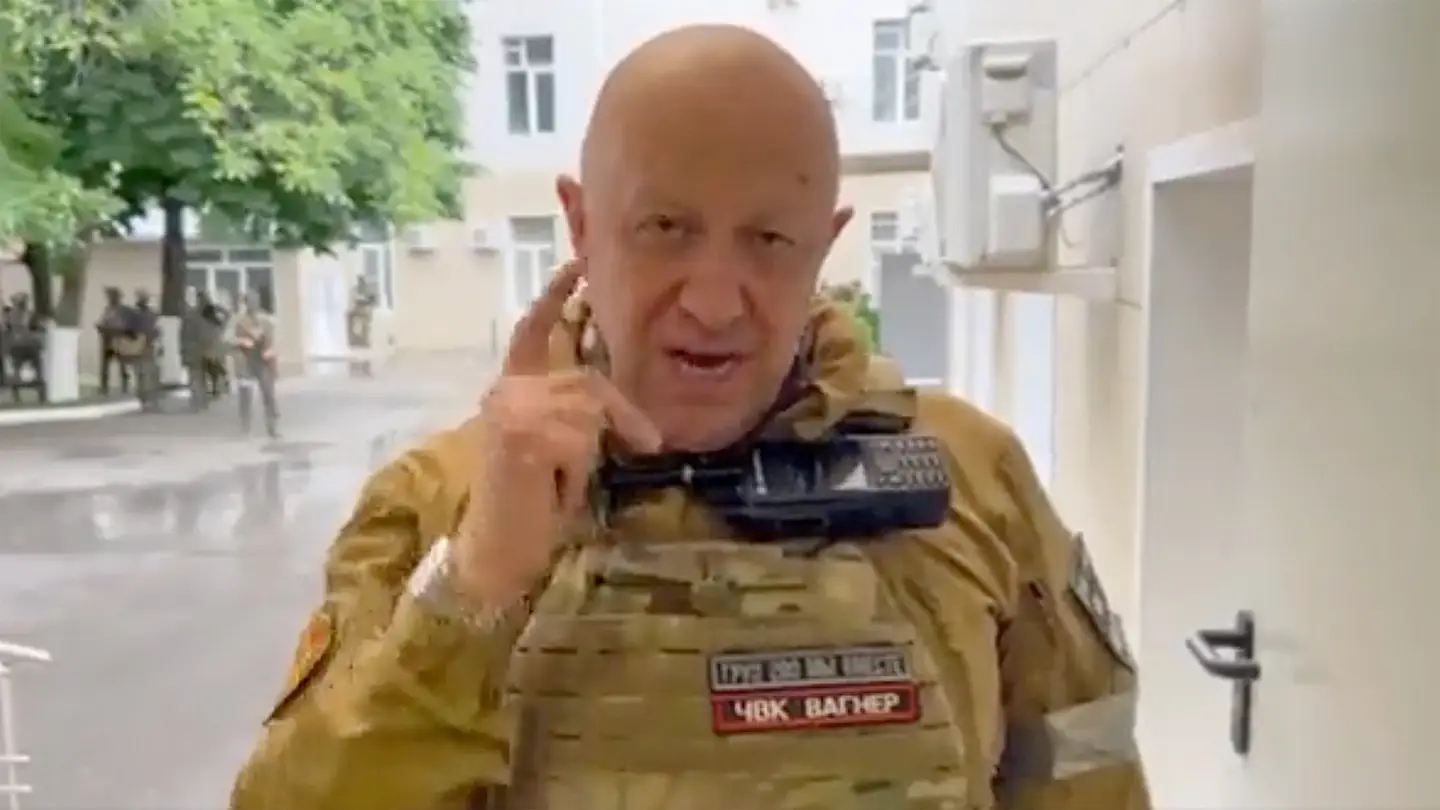
If you have been following the news lately, you might have heard of the Wagner Group, a private military contractor that has been involved in various conflicts around the world, from Ukraine to Syria to Libya.
The Wagner Group is led by Yevgeny Prigozhin, a close associate of Russian President Vladimir Putin, who is also known as “Putin’s chef” for his catering business that serves the Kremlin.
But what you might not know is that Prigozhin and his mercenaries have recently made a surprising move: they have relocated to Belarus, a former Soviet republic that is now ruled by authoritarian leader Alexander Lukashenko. Why did they do that? And what are their plans for the future?
The Mutiny Against Moscow
The Wagner Group’s move to Belarus was not voluntary. It was the result of a dramatic mutiny that Prigozhin and his fighters staged against Putin in late 2023, when they refused to obey Moscow’s orders to withdraw from eastern Ukraine, where they had been fighting alongside pro-Russian separatists against the Ukrainian army.
Prigozhin and his men claimed that they had been betrayed by Putin, who had agreed to a peace deal with Ukrainian President Volodymyr Zelensky that would end the war and restore Ukraine’s sovereignty over its territory. Prigozhin accused Putin of selling out Russia’s interests and abandoning the people of Donbass, the region where the conflict was raging.
The mutiny sparked a fierce confrontation between Moscow and Wagner, with Russian security forces raiding Prigozhin’s offices and properties in St. Petersburg and confiscating his cash and weapons. Putin denounced Prigozhin as a traitor and a criminal, and vowed to bring him and his mercenaries to justice.
But Prigozhin and his fighters were not easily subdued. They managed to hold their ground in Bakhmut, a strategic city in eastern Ukraine, where they resisted the attacks of both Ukrainian and Russian forces. They also released a series of videos on social media, in which they declared their loyalty to Russia and appealed to the Russian people to support their cause.
The Deal with Belarus
The standoff between Moscow and Wagner lasted for several months, until an unexpected mediator emerged: Lukashenko, the president of Belarus. Lukashenko, who has been in power since 1994 and has faced massive protests against his rule since 2020, saw an opportunity to strengthen his position by offering refuge to Prigozhin and his men.
Lukashenko contacted Prigozhin and proposed a deal: he would allow Wagner to move to Belarus, where they would be safe from prosecution and would be able to train and operate freely. In exchange, Wagner would provide security services to Lukashenko and help him suppress any opposition or dissent in his country.
Prigozhin agreed to the deal, seeing it as a way out of his predicament. He also hoped that by moving to Belarus, he would be able to maintain some contact with Russia and eventually restore his relationship with Putin.
The deal was announced in May 2023, when Lukashenko flew to Bakhmut and met with Prigozhin in person. The two leaders hugged and praised each other as friends and allies. Lukashenko said that he was happy to welcome Wagner to Belarus, where they would be treated as “brothers”. Prigozhin said that he was grateful to Lukashenko for his generosity and hospitality, and that he was ready to serve him loyally.
The deal was also endorsed by Putin, who said that he was glad that the conflict with Wagner had been resolved peacefully. He said that he had no hard feelings towards Prigozhin or his men, and that he wished them well in their new home.
The New Journey to Africa
But what is Wagner’s new home like? And what are they doing there?According to Lukashenko, Wagner is now based in several military camps across Belarus, where they are training and preparing for future missions. He said that Wagner is not only providing security for him and his government, but also helping the Belarusian army improve its skills and capabilities.
Lukashenko also said that Wagner is not only working for him, but also for other countries that need their services. He said that he has arranged contracts for Wagner with several African nations, where they will be deployed soon.
Lukashenko did not name the countries or the nature of the contracts, but he said that they were lucrative and beneficial for both Wagner and Belarus.
He said that Wagner would earn money from their operations in Africa, while Belarus would receive a share of their profits as well as access to natural resources and markets.
Lukashenko also said that he was proud of Wagner’s achievements in Africa, where they have already established a reputation as a powerful and reliable force. He said that Wagner has been involved in various projects and activities in Africa, such as:
- Supporting the government of the Central African Republic (CAR) against rebel groups and securing its mineral wealth, especially diamonds and gold.
- Fighting alongside the Libyan National Army (LNA) against the UN-backed Government of National Accord (GNA) and controlling the oil fields and ports in eastern Libya.
- Assisting the government of Sudan in suppressing protests and opposition movements and exploiting its gold and uranium deposits.
- Protecting the interests of Russia and its allies in Mali, where a coup d’etat ousted the president and sparked a civil war.
Lukashenko said that Wagner’s presence in Africa is not only beneficial for Wagner and Belarus, but also for Russia and its strategic goals. He said that Wagner is helping Russia expand its influence and presence in Africa, where it competes with other global powers such as the US, China, France and Turkey.
Lukashenko also said that Wagner is not only a military force, but also a political and economic actor. He said that Wagner is not only fighting and killing, but also building and developing. He said that Wagner is not only plundering and exploiting, but also investing and cooperating. He said that Wagner is not only a mercenary group, but also a humanitarian organization.
Lukashenko said that he was confident that Wagner’s new journey to Africa would be successful and rewarding. He said that he was looking forward to seeing Wagner’s achievements and contributions to the continent. He said that he was happy to be Wagner’s partner and friend.
The Truth Behind the Lies
But how much of Lukashenko’s claims are true? And how much are lies?
The truth is that Wagner’s move to Belarus is not a happy ending, but a dangerous gamble. The truth is that Wagner’s deal with Lukashenko is not a win-win situation, but a risky bargain.
The truth is that Wagner’s journey to Africa is not a noble mission, but a greedy adventure. The truth is that Wagner is not a savior of Belarus, but a threat to its sovereignty and stability.
The truth is that Wagner is not a protector of Africa, but a predator of its resources and people. The truth is that Wagner is not a friend of Russia, but a foe of its interests and values.
The truth is that Wagner is a rogue actor that operates outside the law and without accountability. The truth is that Wagner is a violent actor that commits atrocities and abuses human rights. The truth is that Wagner is a corrupt actor that spreads propaganda and disinformation.
The truth is that Wagner’s move to Belarus has created new tensions and conflicts in the region, especially with Ukraine, Poland and NATO.
The truth is that Wagner’s deal with Lukashenko has exposed him to new pressures and sanctions from the international community, especially from the EU and the US. The truth is that Wagner’s journey to Africa has provoked new challenges and risks for itself and its partners, especially from local actors and rival powers.
The truth is that Wagner’s future is uncertain and unpredictable. The truth is that Wagner’s fate is dependent on the whims and interests of Lukashenko, Putin and other leaders. The truth is that Wagner’s actions have consequences and repercussions for itself and others.
The truth is that Wagner’s story is not over yet. The truth is that Wagner’s story will continue to unfold in unexpected ways. The truth is that Wagner’s story will affect us all in one way or another.
The truth is what we need to know. The truth is what we need to tell.