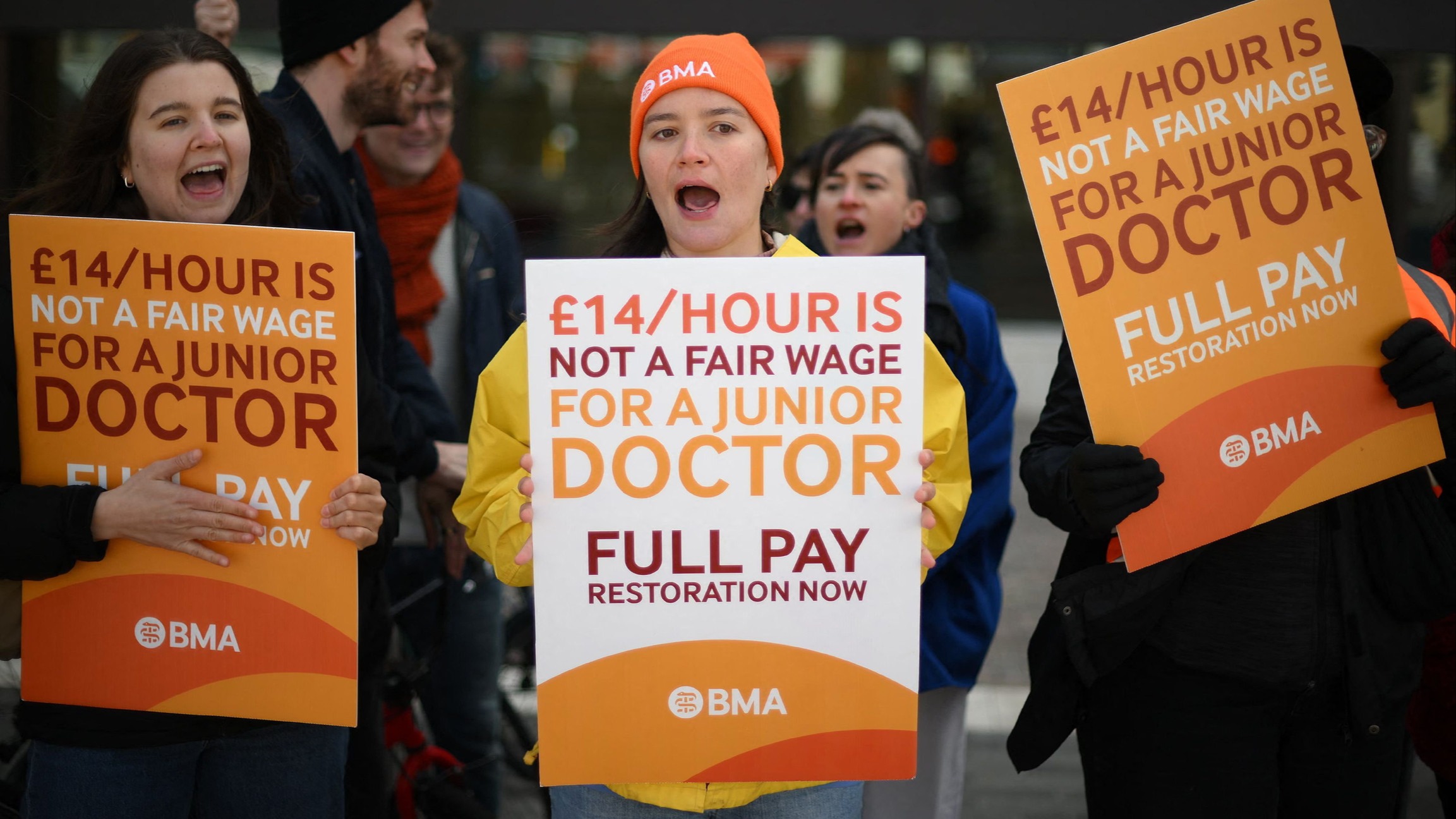
A new 72-hour pay strike by junior doctors in England starts today at 7.00am, causing huge disruption to patients and services, health officials warn.
The junior doctors, who are below consultant level, say they have faced a 26 per cent pay cut in real terms in the last 15 years, as inflation has outpaced salaries.
They want pay restored to 2008-2009 levels, but the government says that would mean an average pay rise of about 35 per cent this year, which is too expensive. The strike is the latest in the National Health Service (NHS), which is funded by the state and has also seen nurses and other medical staff protest for more pay.
The Junior Doctors Committee of the British Medical Association (BMA) said it was open to more talks, but it would also plan more strikes in the next months if the government does not change its five per cent offer. NHS England’s national medical director, Stephen Powis, said on Tuesday that most routine or planned care could be affected.
A similar strike in April made 196,000 hospital appointments and operations be rescheduled. “It (the strike) will have a huge impact on routine care for patients and on the waiting list, as it can take time to rearrange procedures with multiple teams involved,” he said. Emergency, urgent and critical care will be prioritized, he added. Hospital bosses have asked both sides to compromise, as they struggle with huge delays in treatment worsened by the Covid pandemic.
In April, a record seven million people were waiting for treatment, with nearly three million waiting more than 18 months, according to the BMA. The time for patients waiting for their first appointments and cancer treatment was also getting worse, it added.
Health Secretary Steve Barclay said the strikes were “extremely disappointing” and put patients and work to reduce waiting lists in danger. “If the BMA cancels these damaging and disruptive strikes and shows willingness to move significantly from their position, we can resume confidential talks and find a way forward, as we have done with other unions,” he added.
Junior doctors in Scotland on Tuesday turned down what the Scottish Government in Edinburgh called its “final” pay offer of a 14.5 per cent increase over two years.
BMA Scotland said its members would strike from July 12-15. Health policy is a matter for the governments in Scotland, Wales and Northern Ireland, with the UK government in London overseeing England.
UK annual inflation slowed to a 13-month low in April, but remains high at 8.7 per cent as food prices rise faster than energy costs. Official data for May is due next week.